If you’ve ever gotten a quote for basement waterproofing and heard the words “weeping tile,” you might have walked away with more questions than answers. It’s one of those terms that gets used constantly in the waterproofing industry but rarely gets explained clearly. What is it, exactly? How does it work? And if your home already has it, why is your basement still getting wet?
This post answers all of that. Understanding how weeping tile works — and how it fails — is one of the most useful things a homeowner can know before making any decisions about basement waterproofing.
First: What Is Weeping Tile?
Despite the name, weeping tile has nothing to do with tiles in the traditional sense. The term comes from the original clay drainage pipes used in construction decades ago, which were called tiles. Today, weeping tile refers to a perforated drainage pipe — typically a flexible, corrugated plastic pipe wrapped in a filter sock — installed at the base of a foundation to collect and redirect groundwater away from the structure.
The name “weeping” refers to the way water seeps, or weeps, into the pipe through small perforations along its length. Once inside the pipe, that water is carried away before it has a chance to build up pressure against your foundation walls.
It’s a deceptively simple system. But when it’s working properly, it’s doing an enormous amount of work quietly and invisibly beneath the ground around your home.
How Weeping Tile Actually Works
To understand what weeping tile does, it helps to understand what happens when it isn’t there.
When it rains heavily or snow melts rapidly, large volumes of water enter the soil around your home. That water moves downward through the soil until it reaches a point where it can’t drain any further — and that point is often right at the base of your foundation wall. As water accumulates at footing level, it creates hydrostatic pressure: the force of water pushing outward (and inward) against anything confining it. In this case, that means your foundation.
Hydrostatic pressure is the primary driver of basement water intrusion. It forces water through porous concrete, through wall-floor joints, through hairline cracks, and through any other weakness in the foundation envelope. The longer pressure builds without relief, the more aggressive the intrusion becomes.
Weeping tile solves this by intercepting that water before it can accumulate.
Here’s the sequence:
Groundwater drains downward through the soil toward the footing level. Before it can pool against the foundation wall, it reaches the weeping tile pipe, which runs along the perimeter of the footing. Water enters the pipe through the perforations and flows by gravity toward a discharge point — typically a storm sewer connection, a daylight outlet at a lower grade, or a sump pit inside the home where a sump pump expels it away from the foundation.
The result is a system that continuously relieves groundwater pressure around your home rather than allowing it to build. When weeping tile is functioning properly, it dramatically reduces the hydrostatic pressure your foundation walls are exposed to — which is the root cause of the vast majority of basement water problems.
Interior vs. Exterior Weeping Tile: What’s the Difference?
Weeping tile can be installed in two locations, and understanding the distinction matters when you’re evaluating waterproofing options for your home.
Exterior Weeping Tile
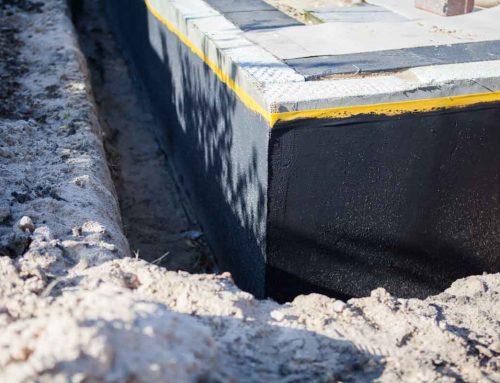
Exterior weeping tile is installed at the base of the foundation on the outside of the home, at the footing level. This is where weeping tile is placed during original construction — it’s the system your home was built with. Exterior weeping tile intercepts groundwater before it ever contacts the foundation wall, which makes it the most proactive form of drainage protection available.
When exterior weeping tile fails, replacing it requires excavating the soil around the perimeter of the home down to the footing. This is a significant undertaking, but it allows for a comprehensive approach: the foundation wall can be inspected and repaired, a new waterproof membrane can be applied, and fresh weeping tile and drainage aggregate can be installed to restore the system to full function.
Interior Weeping Tile
Interior weeping tile is installed inside the basement, beneath the concrete floor, along the interior perimeter of the foundation wall. Rather than stopping water before it reaches the wall, interior weeping tile collects water that has already entered or is actively pushing through the foundation and channels it to a sump pit for removal.
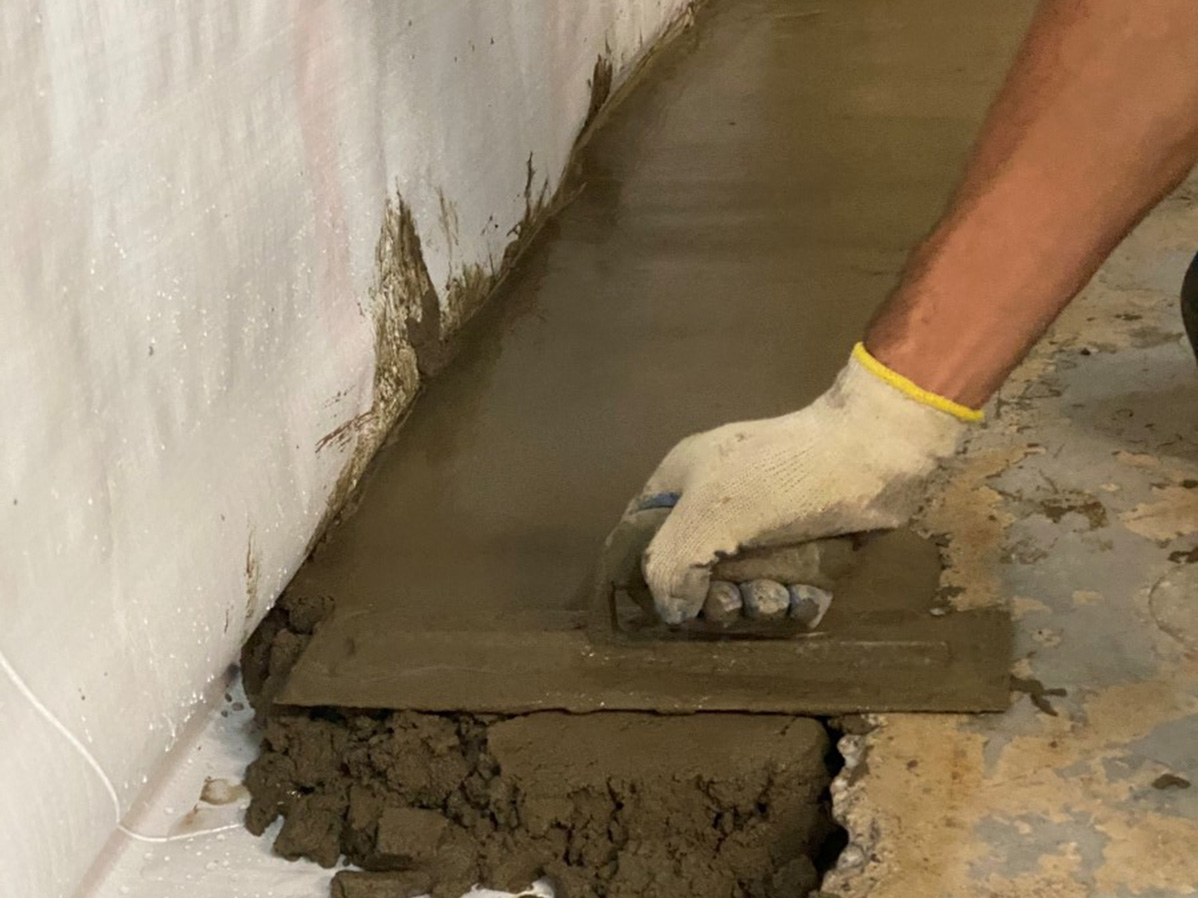
Interior weeping tile is the core component of most interior waterproofing systems. It’s less invasive than exterior excavation, can be installed without disturbing landscaping or exterior structures, and is highly effective at managing hydrostatic pressure from the inside. For many Toronto homeowners, an interior system with a properly installed sump pump is the most practical and cost-effective long-term solution available.
Neither approach is universally superior — the right choice depends on the condition of your existing system, the severity of your water problem, and the specific circumstances of your home.
Why Weeping Tile Fails — And Why It’s So Common in Toronto
If weeping tile is so effective, why do so many Toronto homeowners end up with wet basements?
The answer is age. A significant portion of homes throughout Toronto, North York, Scarborough, and Etobicoke were built before the 1980s, when weeping tile was made from clay — individual sections of clay pipe laid end to end around the foundation. Over decades, these clay systems crack, shift, collapse under soil pressure, and become clogged with soil, roots, and mineral deposits. Once they fail, they stop draining and the groundwater that used to flow harmlessly away from your home begins accumulating at the footing instead.
This is one of the most common root causes of chronic wet basements in older GTA neighbourhoods, and it’s entirely invisible from inside the house. Homeowners often spend years addressing symptoms — patching cracks, running dehumidifiers, finishing and refinishing basement walls — without ever identifying that the original drainage system failed long ago.
Even newer plastic weeping tile systems can fail over time. The filter sock surrounding the pipe, designed to prevent soil from entering and clogging the perforations, can become saturated with silt and fine particles. When the sock blocks up, water can no longer enter the pipe efficiently, and drainage slows or stops.
How Do You Know If Your Weeping Tile Has Failed?
There’s no single obvious sign, which is part of what makes weeping tile failure so difficult to catch without a professional assessment. That said, the following patterns are strongly associated with drainage system problems:
Chronic, recurring dampness along the base of basement walls — particularly along the wall-floor joint — that returns despite repeated attempts to seal or patch it.
Widespread seeping through porous concrete or block walls rather than through a specific crack or point of entry.
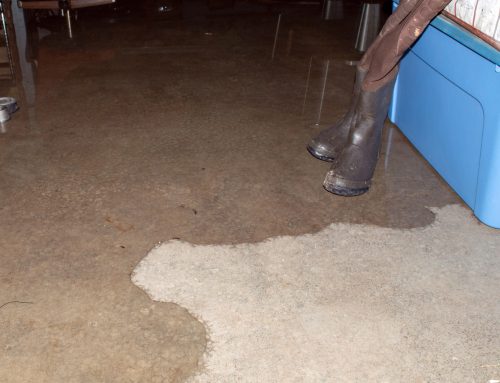
Water pooling on the basement floor during or after heavy rain, without a clear source visible on the walls.
A sump pump that runs continuously or cycles on very frequently during wet periods, suggesting it is managing a high volume of groundwater with no upstream drainage relief.
An older home — particularly one built before 1980 — that has never had its waterproofing system updated.
Any of these patterns warrants a proper assessment by a waterproofing contractor who can evaluate whether the existing drainage system is still functioning and what the best path forward looks like.
The Bottom Line
Weeping tile is the unsung foundation of basement waterproofing. It doesn’t seal walls or fill cracks — it addresses the underlying pressure that forces water through walls and cracks in the first place. When it’s working, you never think about it. When it fails, the effects show up slowly and persistently in ways that are easy to misdiagnose.
If you’re dealing with a consistently damp or wet basement, and surface repairs haven’t solved the problem, the drainage system beneath and around your foundation is the place to look.
Get a Clear Answer From a Contractor You Can Trust
At Max Wolf Construction, we’ve been diagnosing and resolving exactly these kinds of problems for Toronto and GTA homeowners for years. Our in-house crews bring 30+ years of combined experience with interior and exterior weeping tile systems, and every project we complete is backed by a 25-year written transferable guarantee.
We’ll assess your situation honestly, explain what we find, and recommend only what your home actually needs.
Contact us today to schedule your free estimate.