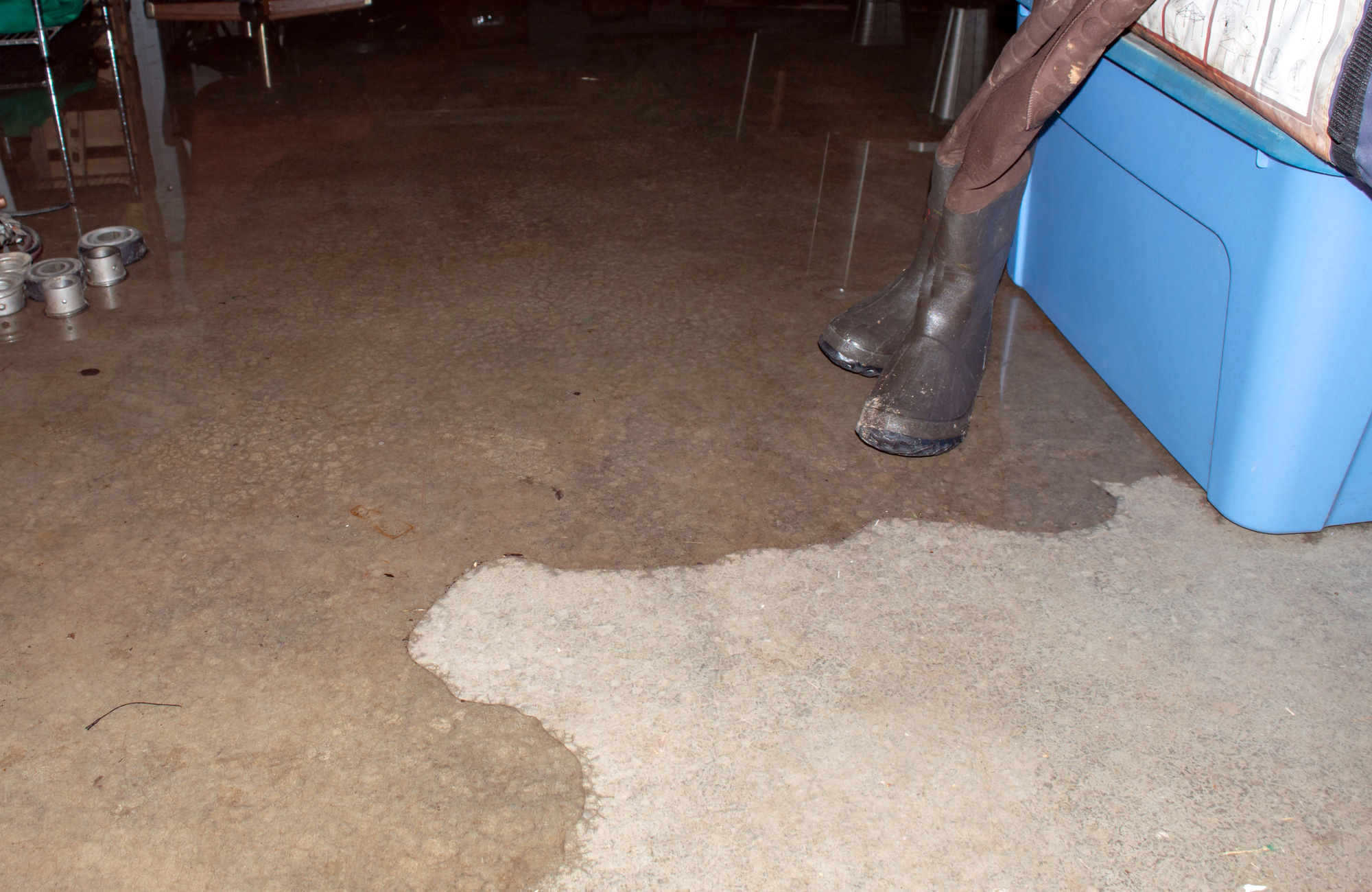
It’s one of the most common things homeowners say when they call us: “I checked everything outside. My walkways look fine. There are no visible cracks. So why is my basement still wet?”
It’s a fair and frustrating question — and the answer surprises a lot of people. The condition of your concrete walkways, patio, or driveway has very little to do with whether water is getting into your basement. In fact, surface concrete is one of the last places a waterproofing professional looks when diagnosing a wet basement problem.
If your basement is wet and your cement walks aren’t cracked, you’re not missing something obvious. You’re just dealing with a problem that works largely underground, out of sight. Here’s what’s actually going on.
The Real Path Water Takes Into Your Basement
Most homeowners assume water gets into a basement by finding a visible opening — a crack in the wall, a gap in a window well, or a break in the concrete outside. And while those things can absolutely contribute to water intrusion, the more common entry points are far less visible.
Water is patient and persistent. It follows the path of least resistance, and in most cases, that path runs through the soil around your foundation — not over the surface of your walkways.
Here’s the typical sequence of events:
Rain falls or snow melts. That water soaks into the ground — especially in areas where soil hasn’t been compacted, or where it’s been disturbed by previous landscaping or construction. As the water table around your home rises, hydrostatic pressure builds up against the exterior of your foundation walls. Eventually, that pressure pushes water inward through points that have nothing to do with what’s visible on the surface.
Your cement walks may look pristine. But underneath them, beside them, and behind your foundation walls, a completely separate problem is unfolding.
The Most Common Entry Points (That Have Nothing to Do With Your Walkways)
The Wall-Floor Joint
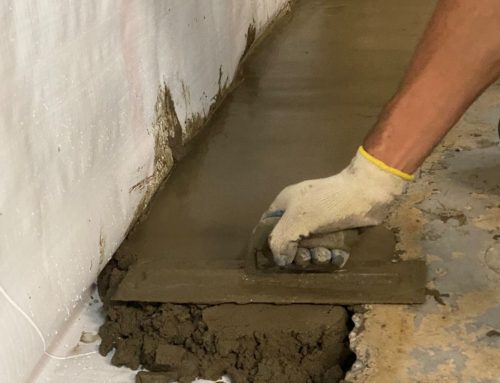
The most frequent source of basement water intrusion isn’t a crack at all — it’s the joint where your basement wall meets the floor. This joint is not a seamless bond. It’s a cold joint, meaning the wall and the floor were poured separately during construction and simply rest against each other. Over time, as the soil around your home shifts and settles, this joint opens slightly and allows water driven by hydrostatic pressure to seep in along the base of the wall.
Many homeowners look at this and assume the floor is cracking or the wall is failing. In most cases, it’s simply the natural gap at the cold joint responding to pressure from outside.
Porous Concrete and Block Walls
Concrete is not waterproof. It is porous by nature, and over time — especially in older homes — concrete foundation walls absorb moisture from the surrounding soil. When hydrostatic pressure is sustained, water doesn’t need a crack to find its way in. It migrates through the wall itself, often appearing as general dampness, white chalky deposits (called efflorescence), or slow seeping across a broad section of wall rather than from a single point.
Homes built with concrete block foundations are particularly susceptible to this. The hollow cores of concrete blocks can fill with water, which then weeps through the mortar joints or through the face of the block itself.
Cracks in the Foundation Wall (Not the Surface)
Here’s a distinction worth making clearly: the concrete walks you’re looking at outside are surface slabs — they are separate structures from your foundation wall. A foundation wall crack can exist entirely underground, below grade, where you’d never see it without excavation. These cracks often develop from soil settlement, freeze-thaw cycles, or the lateral pressure of clay-heavy soil pushing against the wall over years or decades.
If your foundation wall has a crack that begins below the soil line, it may extend upward into the basement interior — but the entry point is underground, which is why checking the surface concrete above won’t reveal anything.
Failed or Absent Weeping Tile
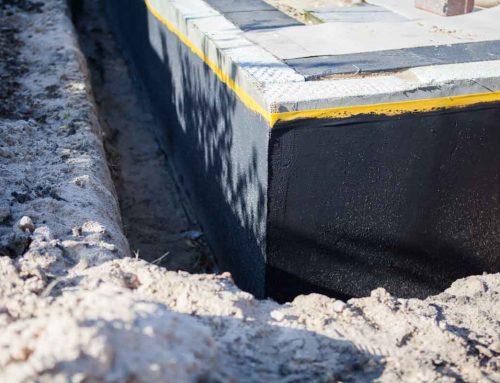
Weeping tile is the perforated drainage pipe installed at the base of your foundation during construction. Its purpose is to collect groundwater and redirect it away from your home before it builds up against the foundation wall. In many Toronto and GTA homes — particularly those built before the 1980s — the original weeping tile was made from clay, which collapses, shifts, and becomes blocked over time.
When weeping tile fails, groundwater has nowhere to go. It accumulates at the footing level and exerts sustained upward and inward pressure against the base of your foundation. This is one of the most common causes of chronic wet basements in older neighbourhoods, and it has nothing to do with what’s happening at the surface.
Window Wells
Basement windows set below or near grade level are often surrounded by window wells — the curved metal or plastic barriers designed to hold back soil. When window wells aren’t draining properly, or when the gravel at the bottom becomes silted over, water pools against the window frame and eventually finds its way inside. Window wells can fail quietly, and because they’re often partially hidden by landscaping, they’re easy to overlook.
Gaps Around Utility Penetrations
Anywhere a pipe, wire, or conduit enters your foundation wall is a potential water entry point. These penetrations are typically sealed at the time of installation, but sealants degrade, shift, and crack over time. A small gap around a water line or drainage pipe can allow water under pressure to push through — often appearing far from the actual entry point once it spreads across the floor.
Why Grading Matters More Than Your Walkways
If surface water is contributing to your problem, the concern is rarely whether the concrete itself is cracked — it’s whether the ground around your home is sloped in the right direction.
Proper grading means the soil around your foundation slopes away from the house, so that rainwater and snowmelt drain outward rather than pooling against the foundation wall. Over time, soil settles and compresses, and what was once a proper slope can gradually reverse. Even a subtle shift toward the foundation is enough to direct significant volumes of water toward your home with every rain event.
Concrete walkways that sit flat or that have settled slightly toward the house can direct surface runoff toward the foundation — not because they’re cracked, but because of the angle they’ve settled at. This is worth having assessed, but it’s typically a contributing factor rather than the primary cause of a serious wet basement.
What Should You Actually Do?
If your basement is wet and you’ve already ruled out the obvious surface issues, the next step is a proper assessment by a waterproofing professional — not another visual inspection from the outside.
A qualified contractor will look at where the water is appearing inside the basement, how it’s entering (seeping, dripping, pooling), the age and construction type of your foundation, the condition of your existing drainage systems, and whether the problem is isolated or widespread. From there, they can identify the actual source and recommend the appropriate solution — whether that’s an interior drainage system, exterior waterproofing, weeping tile replacement, or a combination of approaches.
What won’t solve the problem: surface sealants, hydraulic cement applied to the interior wall, or continued monitoring without intervention. These approaches may slow the symptoms temporarily, but they don’t address the pressure and drainage issues driving water toward your foundation.
The Bottom Line
Your cement walks aren’t cracked — and that’s fine. But the real story of a wet basement plays out underground, where water pressure, soil conditions, drainage failures, and aging materials do their work silently over years.
The good news is that these problems are well understood and very fixable. Once the actual source of water entry is properly identified, the right waterproofing system will protect your basement long-term — regardless of what’s happening at the surface.
Not Sure Where Your Water Is Coming From?
At Max Wolf Construction, we specialize exclusively in residential waterproofing and foundation repair for Toronto and GTA homeowners. Our in-house crews have 30+ years of combined experience diagnosing exactly these kinds of situations — cases where the problem isn’t obvious from the outside, and where the right diagnosis makes all the difference.
Every assessment comes with a clear explanation of what we found and why we’re recommending what we are. No pressure. No guesswork.
Contact us today to schedule your free estimate.